Here at Arrington Capital, we have been longtime supporters of the Polkadot technology, approach, and broader ecosystem as it continues to make web3 development more accessible (in both time to market and costs) for founders and developers.
Today we are taking a look at recent momentum and the state of the ecosystem. Polkadot currently has a network of almost 400 validators actively participating in securing the network and a total staked value of approximately $3 billion – providing a decentralized and secure foundation. Staked DOT has increased 12% in the most recent quarter. Polkadot’s market cap is sitting today at over $6B, making it one the top 15 largest networks.
Stepping back and looking at the ecosystem more broadly, you see an evolution to Polkadot 2.0 happening that is being driven by community dialog and consensus. The next phase of development is focusing on the right things – including economic models for blockspace allocation (such as Gavin Wood’s new mechanisms and “accords” concept) and inter-chain alignment that will drive flexibility and lower barriers to entry for teams launching and reserving parachains. The shift to blockspace on demand will allow developers more cost-effective ways for teams to build on Polkadot.
Messari’s recent report on the “State of Polkadot” was insightful and a recommended read. This thread lays out what the recent shifts mean for go-to-market for new applications and developers.
Meaningful Momentum:
Specific areas of note when it comes to meaningful momentum in the Polkadot ecosystem include:
Shared Security Cost Savings
This concept of shared security that Polkadot will be able to offer is challenging to replicate. Those building in the ecosystem will realize this at a fraction of the cost of what rollups will be as gas prices are driven up.
Developer and Network Activity
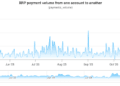
Polkadot remains a leader in developer engagement, with a substantial base of nearly 2,000 monthly active developers. In addition to that, relay chain activity remains strong: Post the launch of OpenGov, the Relay Chain saw heightened activity with an average of 5,200 daily active accounts, underscoring the active participation of the community in governance and network operations.
Governance and Decentralization
OpenGov Model: The introduction of OpenGov in Q2 2023 represented a transformative step in Polkadot’s governance. This model replaced the Council and Technical Committee with the Fellowship, a developer DAO, ensuring decentralization through community voting and a system of checks and balances.
Enhanced Participation and Transparency: OpenGov enables multiple concurrent referenda, streamlining the decision-making process. This model has led to a significant increase in the number of proposals and active participation from the community.
Role of Parity Technologies: Parity Technologies’ evolving role within Polkadot’s ecosystem was highlighted, emphasizing the transition of go-to-market functions to the broader community, further democratizing the development and promotion of the network.
Parachain Development
Auction Progress: Six more parachain auctions were completed, totalling 50. These parachains cover a diverse range of applications, from decentralized infrastructure to smart contract platforms, demonstrating the versatility and scalability of the Polkadot ecosystem.
Parachain Functionality and Usage: The leading parachains, such as Moonbeam and Astar, showed robust user engagement, highlighting the practical applications and real-world utility of the Polkadot ecosystem.
Additional Solutions and Partnerships Paving the Way for Adoption
Simplified Deployment with Tanssi
Tanssi, an Arrington Capital portfolio company, is a permissionless appchain infrastructure protocol focused on simplifying the deployment of application-specific blockchains, also known as appchains. Tanssi is designed to streamline the often lengthy and complex process of traditional blockchain implementations.
One of the problems within the Polkadot ecosystem has been that while the technology is advanced and powerful, the developer experience could be better. It’s still difficult for developers to learn substrate and to launch a chain on DOT – many components go into the deployment process that ultimately results in the time to market being months/years ranging from having to bootstrap a sequencer set, finding out how to incentivize them, maintaining the chain, then integrating things like wallets, block explorers, indexers, oracles, RPC endpoints, Bridges etc.
Tanssi is a layer 1 that leverages the shared security from the Polkadot relay chain and provides all the infrastructural components necessary to run a chain permissionless. For example, block production as a service – Tanssi’s sequencer set will be shared and will produce blocks on behalf of appchains that leverage Tanssi’s infrastructure. Apart from this, Tanssi is working with providers like wallets and the tools mentioned above so that developers have all those tools readily available in one place and don’t have to figure out the integrations independently.
By providing developers with all these infrastructural components they need to run their chains, Tanssi allows them to reduce the time, effort and resources required to deploy a fully equipped appchain, cutting the time to market from months to hours. Offering the path of least resistance to developers regarding appchain deployments will lead to an accelerated adoption of the Polkadot ecosystem. Ultimately, Tanssi makes the deployment of a fully running app-specific chain as easy as the deployment of a smart contract at a fraction of the cost.
Within just six months, the Tanssi team has managed to achieve impressive milestones, including:
- The Containerchain pipeline has significantly expanded with a total size of 186, marking a notable advancement in the space.
- This growth is further emphasized by the commitment of 49 different projects, demonstrating widespread interest and investment in the pipeline development.
- An impressive milestone was achieved by deploying 100 appchains in testnet, showcasing the robustness and scalability of the system.
- Tanssi has introduced approximately 134 new projects to the Polkadot ecosystem, indicating a strong trend towards cross-platform synergy.
- The global reach of Tanssi is underlined by the creation of 10 global communities, reflecting diverse and widespread engagement across different regions.
Moonbeam Routed Liquidity (MRL)
Moonbeam Routed Liquidity (MRL) is a pivotal feature within the Polkadot ecosystem, facilitating the seamless flow of cryptocurrency liquidity between Polkadot and other ecosystems such as Ethereum, Solana, Polygon, or Avalanche. It simplifies liquidity transfer into and across Polkadot, providing users a straightforward experience. T This system represents a significant advancement in routing crypto assets into the Polkadot ecosystem, highlighting Moonbeam’s capability to move assets within and back out to their original chains. Read more.
Lastic – A blockspace Marketplace
Lastic is an innovative platform designed to transform the concept of blockspace in the blockchain and Web3 landscapes. Unlike traditional marketplaces focused on the reordering of transactions within a block, Lastic aims to provide a more flexible and dynamic approach to how blockspace is used and traded. Read more.
Polimec, Kilt and Deloitte partnership
Polimec, in collaboration with Deloitte Switzerland, has introduced an innovative approach to regulatory-compliant fundraising within the decentralized finance (DeFi) sector by launching reusable KYC (Know Your Customer) credentials. This initiative, powered by KILT Protocol, marks a significant advancement in the Polkadot ecosystem, enhancing security, reducing fraud risks, and accelerating Web3 development. The credentials, anchored on the KILT blockchain and issued by Deloitte, streamline early-stage fundraising on Polimec, providing a higher level of regulatory compliance, security, and data privacy. Read more.
The Tanssi Take: Competitive Advantages of Tanssi & Polkadot
Below is from the team of innovators at Tanssi, a newer member of the Arrington Capital ecosystem, and provides the team’s take on how Tanssi & Polkadot have a notable competitive advantage over other ecosystems.
There are several factors and architectural competitive advantages that Polkadot provides that we believe can set us apart from other competitors. To begin with, we believe that the concepts of Shared Security and the cost of tapping into that security will be relevant in the years to come.
Substrate and Polkadot will shift from a reserve-based economic model for blockspace (parachains) to a spot model (pay for blockspace on demand). This will make deploying blockspace in a highly decentralized and secure environment much more capital efficient than competitors.
One of the biggest reasons, among others, developers choose to build rollups on ETH is that they inherit its security without having to bootstrap a validator set of their own. However, Ethereum will become increasingly expensive to use as the subsequent cycles come around, more rollups are deployed, and gas prices start to increase, and a lot of that cost will flow to rollups as well.
In particular, data availability costs will become increasingly expensive; ETH is aiming to make this cheaper with danksharding; however, given the demand seen on Ethereum it’ll still be costly to use vs alternate ecosystems. With solutions like Celestia, there are still a lot of open questions in terms of how much engineering complexity and latency it will add to the equation.
The problem with the concept of security is that in alternative ecosystems, bootstrapping a high-grade security environment is very difficult. Beyond a lot of work and energy, you also need to be able to attract enough staked value to secure the network correctly.
Polkadot’s relay chain has approximately $3 billion in staked value, combined with hundreds of validators, so it is highly secure and decentralized. Offering that degree of security at a fraction of the cost of competitors and allowing developers to tap into that in a few clicks will take much work to replicate – this is an essential competitive advantage Tanssi will have.
We foresee that Tanssi will act as a ‘backend’ orchestration layer (similar to K8s in web2) for applications that could perhaps have their contracts deployed to ETH or Polygon etc. to access assets, and users there and then offloading compute logic or blockspace tolling workloads to Tanssi containers.
Another important technical differentiator we see compared to rollups is finality. Finality is a topic that is very important to developers, especially as we move into a more cross-chain connected and layered space.
Many developers are building both cross chain applications and L3s – which entail deploying many instances of the protocol on several chains, and then connecting them via GMPs such as Axelar, LayerZero, etc. In the case of L3s they’re seeking to settle blocks on the L2 or down to the L1.
When you add more layers to application architectures, this tends to increase latency. With poor finality properties like on optimistic rollups (1 week dispute period and hard finality can take up to several minutes/days) it becomes an unfavorable environment to use as a hub since poor finality properties combined with higher latency is a bad combination that will result in the end user and developers having to wait a long time for transactions and messages to be finalized.
Tanssi offers developers 6 second finality, which is advantageous for cross chain applications that must settle and reconcile messages quickly.
Centralization is another elephant in the room with rollups – having a single sequencer be responsible for the production of all blocks can lead to several issues, such as single points of failure, censorship, collusion and it’s simply not a decentralized environment suitable to build protocols. Tanssi will offer both a shared and decentralized sequencer set that will produce blocks on behalf of chains, to reduce the risks of centralization.
These are competitive advantages uniquely enabled by our architecture, which are challenging to replicate.
In addition, we are actively exploring ways to extend Tanssi’s execution environment and infrastructure to bring more developers into the ecosystem. One exciting new concept is being able to target smart contract developers on Ethereum that will need to offload specific compute logic or workloads of their applications to a dedicated containerchain on Tanssi.
This allows them to benefit from the assets, and users that Ethereum has to offer, while accessing dedicated blockspace for components of their applications that require it.
Tanssi and Polkadot will become a more back-end focused environment analogous to a ‘web3’ version of AWS – where developers will be able to access fully decentralized, highly secure and composable blockspace on demand, and Tanssi will the orchestration protocol that allows them to access that in the easiest way possible. It is not unreasonable to compare Tanssi to Kubernetes.
Tanssi will be able to access smart contract developers on any ecosystem and allow them to benefit from a cloud-like experience for their backend needs.
Give Tanssi a follow!