The U.S. Treasury Department sanctioned Iranian crypto exchange BitBank on September 17, 2026, alleging it facilitated the transfer of hundreds of millions of dollars in Bitcoin to the Islamic Revolutionary Guard Corps between June and July.
The Office of Foreign Assets Control also designated BitBank’s software developer, Pishtaz Simorgh Electronic Trade Company, along with three associates of Iranian financier Babak Zanjani: Hossein Ali Zaker Hossein, Mohammad Mahdi Zaker Hossein, and Seyed Adel Heidari.
Treasury described BitBank as a subsidiary of Dot One Value Creation Group, a network OFAC had previously designated, with all three individuals serving as executives within that same network.
Treasury Secretary Scott Bessent said the designations make clear that efforts to finance the Iranian regime using cryptocurrencies are not beyond OFAC’s reach, adding that anyone who supports the Iranian regime will be sanctioned by the Department of the Treasury.
The Treasury Department confirmed the action through its official X account, framing the designations as part of a broader campaign against Iran’s sanctions evasion infrastructure:
Who Babak Zanjani Is
Zanjani built a fortune, and later a death sentence, moving money for Iran. Tehran convicted him of embezzlement in 2016 and sentenced him to death, but that didn’t stop him from operating sanctions evasion networks, this time using a Bitcoin exchange rather than the oil-trading shell companies he once controlled, according to the Treasury Department’s statement.
| Designated Entity/Individual | Role Alleged by Treasury |
| BitBank | Iranian crypto exchange, subsidiary of Dot One Value Creation Group |
| Pishtaz Simorgh Electronic Trade Company | BitBank’s software developer |
| Hossein Ali Zaker Hossein | Zanjani associate, Dot One network executive |
| Mohammad Mahdi Zaker Hossein | Zanjani associate, Dot One network executive |
| Seyed Adel Heidari | Zanjani associate, Dot One network executive |
Table 1. Entities and individuals designated in the BitBank action.
OFAC’s designations were made under Executive Order 13902, the authority Treasury has repeatedly used to target Iran’s digital asset sector specifically.
How BitBank Allegedly Financed the IRGC
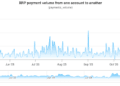
Treasury alleges Zanjani used BitBank to move hundreds of millions of dollars to the IRGC in Bitcoin between June and July 2026. The agency separately alleged the Hormuz Safe Marine Services Authority has used the exchange since June to transfer payments to the Iranian regime, part of a bitcoin-settled maritime insurance platform first reported by Iranian media in May, promoted then as targeting more than $10 billion in revenue for insuring ships passing through the Strait of Hormuz.
That platform surfaced a few months after the U.S.-Iran conflict began, and its bitcoin-settlement structure illustrates how blockchain payments can route funds around traditional banking restrictions, a dynamic explained further in a guide on how law enforcement uses blockchain analytics to trace crypto.
Part of a Broader Campaign Against Zanjani’s Network
The BitBank designation extends an existing sanctions campaign targeting businesses connected to Zanjani’s financial network. In January 2026, OFAC designated Zanjani himself alongside two UK-registered exchanges, Zedcex and Zedxion, alleging they laundered funds linked to the IRGC. In July, Treasury designated additional companies and individuals tied to Zanjani’s wider operation across Iran and offshore jurisdictions.
The action falls under Operation Economic Outcast, a whole-of-government campaign against Iran that Bessent announced August 24, 2026, part of a broader pattern covered in an explainer on how the Iran-US conflict has affected Bitcoin and crypto markets.
What Sanctions Designation Means in Practice
All property and interests in property of the designated persons that are in the United States or under U.S. persons’ control are now blocked and must be reported to OFAC, and entities owned 50% or more by blocked persons are also automatically blocked. U.S. persons generally cannot transact with designated parties without authorization, and non-U.S. parties dealing with BitBank may face secondary sanctions exposure.
What Happens Next in the Zanjani Sanctions Campaign
Treasury has continued designating new components of Zanjani’s network roughly every few months since January 2026, suggesting further actions remain likely as OFAC continues mapping the broader Dot One structure. Additional clarification on the specific scope of the BitBank designation had not been provided at the time of reporting.
What this means for you: The BitBank sanctions reinforce that using cryptocurrency to move funds does not place transactions beyond the reach of U.S. sanctions enforcement. Anyone interacting with Iranian crypto exchanges or entities connected to previously sanctioned networks faces real exposure risk, regardless of whether the underlying transactions occur through Bitcoin rather than traditional banking channels.
This article is for informational purposes only and does not constitute financial or legal advice. Sanctions designations carry legal consequences, and individuals or businesses should independently verify counterparties against current OFAC lists before conducting cryptocurrency transactions.